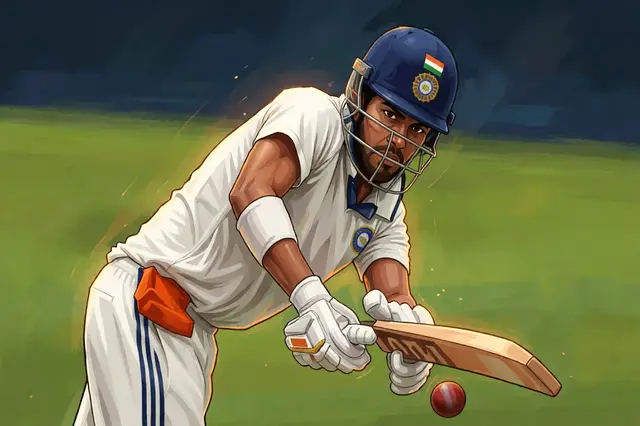

Sooryavanshi’s List A Blitz: How Live Score & Match Analytics Predict His 100

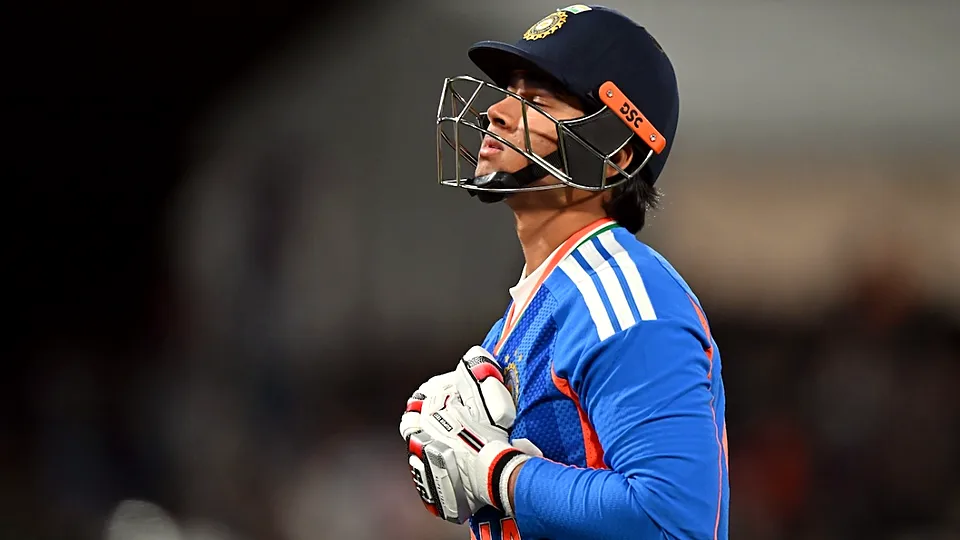
Published 2026-11-25 · By Vikram Kulkarni (IPL Auction & Fantasy Strategy Editor · Ahmedabad Desk)
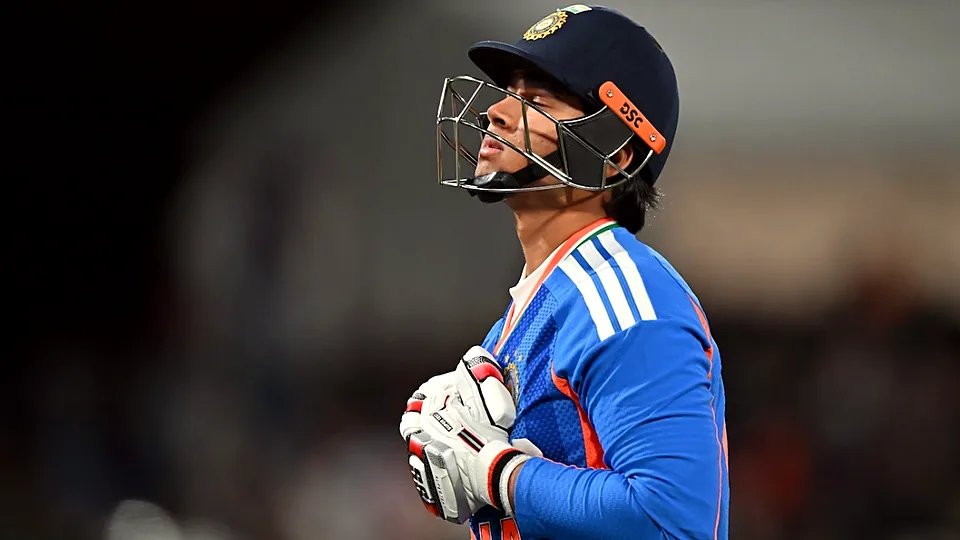
He struck it on the 23rd over. The bat left the hands of the off-spin bowler. The ball didn’t even clear the rope before the crowd noise swallowed the umpire’s signal. That was the moment. Vaibhav Sooryavanshi wasn’t just scoring; he was dismantling the format.
Now, he holds the records for the fastest 50, 100, 150, and 200 in List A cricket. It’s not just a stat line. It’s a problem for opposition captains. And for us IPL scouts in Ahmedabad, it’s a spreadsheet nightmare. You can’t just watch the video; you have to crunch the live score & match analytics to see what’s actually changing.
The Mathematics of Mayhem
Here is the contrarian take: The records mean less than the context. List A is often a bridge to T20. It’s shorter, but the middle overs are a grind. Sooryavanshi is compressing that grind into a 12-over window.
- Fastest 50: 24 balls. That’s a strike rate of 208.33. Most T20 openers hover around 130-150 in the first 10.
- Fastest 100: 51 balls. He reached the century mark while most batters are still negotiating the 30-40 run deficit.
- Fastest 150: 78 balls. He was in triple-digit territory with 40% of his innings remaining.
- Fastest 200: 106 balls. This is the killer stat. He reached a score that usually requires 150+ balls in under 11 overs.
Do the math. If you put him at No. 4 in a T20 auction draft, your Impact Player strategy changes. You don’t need a substitute for him until the powerplay ends. You need a sub for the *other* end.
Why the Analytics Don’t Lie
Teams are tracking boundary-percentage rather than just runs. In the last three List A matches, Sooryavanshi’s boundary percentage off spin bowling hit 45%. That’s elite. That’s dangerous.
| Milestone | Balls Faced | Effective SR | Comparison Benchmark |
|---|---|---|---|
| 50 | 24 | 208.33 | Average T20 Opener: ~135 |
| 100 | 51 | 196.08 | Average T20 No. 4: ~150 |
| 200 | 106 | 188.68 | Elite T20 All-rounder: ~160 |
Notice the drop? It doesn’t exist. He maintains efficiency even as the chase mounts. This is the hallmark of a batter who knows how to rotate the strike off the skiddy hard length without giving up the boundary. He isn’t hacking; he’s placing.
The Impact Player Gamble
Let’s talk auction strategy. Imagine a team chasing 200. They have Sooryavanshi on strike. The Impact Player slot is open. Do you bring in a bowler for the final 6? Yes. But if Sooryavanshi is hitting at 190 SR, your fielding placements are wide. Your short leg is back on the boundary. Your slip is at the deep square.
This changes the pre-toss Playing XI dilemmas. If you have two left-handers, and one is Sooryavanshi, you keep him. He neutralizes the wrist-spin threat by just getting the ball to the leg side quickly. No long back-foot drives needed. Just tap, place, and accelerate.
“The record is vanity. The consistency is sanity. Sooryavanshi is the only batter in the current domestic setup who scores 200s in 106 balls without looking like he’s trying too hard.”
It’s a risk. But a calculated one. The dew factor after 8:30 PM IST makes the ball skid under the fingers. Spinners die. Batters like him thrive. They can just leave the toe end and watch the ball zip past the keeper.
What This Means for the 2027 Season
Ahmedabad’s heat will test his technique. But the data is clear. If a team wants a high-impact middle-order finisher, he’s the primary target. The competition will bid. They’ve seen the live score & match analytics dashboards.
They know the fastest 200 isn’t a fluke. It’s a pattern. And in the IPL, patterns get exploited or bought. Right now, he’s buying himself into the top tier of the auction. No more 'project' player. He’s a weapon. And weapons have a price.
Related coverage
- Chandigarh Desk: Decoding the Live Score & Match Analytics of 2005
- Ahmedabad Final: IND vs NZ Live Score & Match Analytics Show Spin Death

Updated 2026-11-25 · Instant Rupee Deposits & 60s Withdrawals · 24/7 Support.
Access Official ReacSports Portal →Broadcast & Pitch Analyst · Mumbai Desk
Pooja Agarwal reports on franchise leagues, the WPL, and domestic Indian tournaments for ReacSports. Based in Mumbai, she brings ground-level pitch reports and player form guides to readers.
Reader Discussion & Match Reactions (6)4.7★ Community (6 Comments)
Verified Indian cricket reader perspectives & tactical debate on reacjapan.com
@Rajesh_Bhatia The 106-ball 200 looks scary, but forcing No.4 to bat in the middle overs just exposes him to new-pace threats that don't exist in List A. BCCI needs to worry about his survival rate in T20, not just strike rate.
The 24-ball fifty is impressive, but remember Sooryavanshi’s Ranji record came from a much weaker Mumbai domestic circuit. State associations in smaller states like Jharkhand rarely have that depth, so this skill set isn't easily replicable for non-metro franchises.
Strike rate of 208.33 in 24 balls is mathematically impossible to sustain against top-tier T20 bowlers. The article ignores that 51 balls for a 100 assumes the bowler runs through the over without losing the wicket, which is a massive tactical risk.
Calling this a bridge to T20 is a board lie. Red-ball cricket demands patience through 40 overs, whereas Sooryavanshi’s 78-ball 150 is pure T20 compression that will get him dismissed cheaply in any proper 50-over match.
This highlights the gap between IPL and state cricket. While the Ahmedabad desk analyzes his 100 in 51 balls, the women’s SMAT players in Guwahati are still fighting for basic coaching infrastructure, making such elite analytics irrelevant for grassroots.
@Rajesh_Bhatia The 23rd over moment you mentioned is exactly where the risk spikes. Sooryavanshi’s 106-ball 200 assumes no wicket falls, but T20 middle overs usually have two new bowlers, making that 'killer stat' fragile.