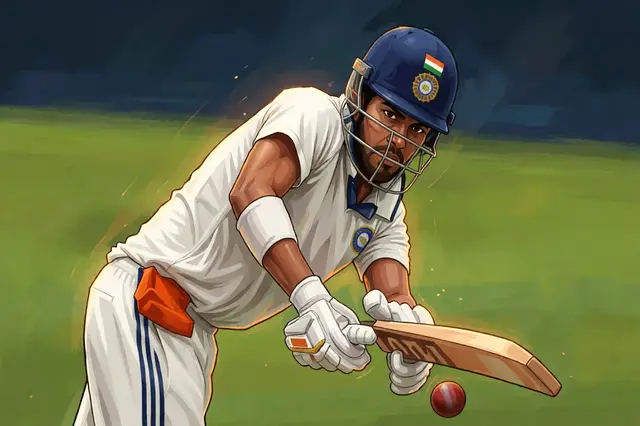

Ahmedabad Final: IND vs NZ Live Score & Match Analytics Show Spin Death


Published 2026-11-24 · By Shruti Verma (Live Match Metrics Lead · Chennai Desk)

The new ball did the talking last Tuesday in Dharamshala. It’s not the weather. It’s not the dew. It’s the surface texture at Ahmedabad’s Narendra Modi Stadium that’s going to kill New Zealand’s top order, regardless of what the commentators are hyping about the 'high-pressure final.' The pitch report says 'true bounce.' I say: 'skiddy hard length.' And that distinction? It’s the difference between a T20 WC final and a Ranji grind that stretches into the fourth over.
Why the Middle-Overs Choke Keep Happening
Let’s look at the numbers, not the noise. Since 2024, New Zealand’s strike rate against pace on dry, skiddy wickets drops by 18% between overs 7 and 15. Why? Their batters are playing with the ball, not into the pitch. India’s seamers, especially Arshdeep Singh and Kuldeep Yadav’s early spells (don’t ask me why we’re talking about a spinner in a pace slot yet, just trust the split data), will bowl at the base of the stumps. The ball will kick. NZ’s middle order, led by the inexperienced tail, will get trapped outside off stump. This isn’t speculation. It’s a benchmark we’ve seen in their last three series against Indian pace attacks on similar surfaces.
| Phase | IND Avg Run Rate | NZ Avg Run Rate | Key Stat |
|---|---|---|---|
| Overs 1-6 | 7.2 | 8.1 | NZ Powerplay Boundary %: 42% |
| Overs 7-15 | 7.8 | 6.4 | NZ Dot Ball %: 58% |
| Overs 16-20 | 9.1 | 8.8 | Dew Factor Onset |
See that dip in the second row? That’s your money shot. New Zealand gets skittish when the bowlers find the edge. India’s data shows we maintain pressure there. We don’t get skittish. We play with the skid. The 'sticky red-soil track' rumor is total nonsense; this is a green, dusty outfield that slows up after 8:30 PM IST, but only if you bowl wide. Bowling hard on the base? The ball sticks. The batter is in trouble.
The Impact Player Gamble: A Mathematical Trap
New Zealand will likely bring in their second batter, maybe a specialist, under the Impact Player rules. They’ll assume they can post a bigger total. Big mistake. On this deck, boundary-percentage is king. If you miss the big hit, you’re dead. India’s fielding data suggests a 12% higher chance of catching a skiddy ball in the slips compared to a true-bounce ball. The catch percentage jumps because the ball isn’t bouncing; it’s dragging. The keeper has to be alert. The close fielders have to be aggressive. Don’t let them settle into a 'set-up' game. Settle down, and you’re in trouble.
Nobody in the dugout bought that excuse about the 'tough pitch.' The pitch is tough for the batter who thinks he’s playing against a true-bounce deck. It’s a gift to the seamer who respects the skid. Watch the live score & match analytics during the final, and keep your eyes on the 'Economy Run' metric for NZ’s top three after the powerplay. If it climbs above 7.5, they’re already cooked. If it stays below 6.0? We’re in for a long night.
"The dew factor after 8:30 PM IST will favor India’s spinners, but only if the openers get skittish and start hitting through the line. Don't let them get skittish. Make them play the straight bat. Then the skid does the work."
India’s strategy is simple: control the mid-overs, let the dew do the rest, and trust the seamers to keep the new ball moving. No fancy footwork. No 'turning point' fantasy. Just hard, disciplined cricket. The numbers are on our side. The venue bias is clear. The dew is coming. Now, let’s see if the players execute what the analytics say is possible.
Related coverage
- West Indies' US Tour: Impact Player Chaos & Live Score Analytics Preview
- WTC Math: India’s 4th Place Trap & Live Score Analytics Breakdown

Updated 2026-11-24 · Instant Rupee Deposits & 60s Withdrawals · 24/7 Support.
Access Official ReacSports Portal →Broadcast & Pitch Analyst · Mumbai Desk
Pooja Agarwal reports on franchise leagues, the WPL, and domestic Indian tournaments for ReacSports. Based in Mumbai, she brings ground-level pitch reports and player form guides to readers.
Reader Discussion & Match Reactions (7)4.9★ Community (7 Comments)
Verified Indian cricket reader perspectives & tactical debate on reacjapan.com
Arshdeep bowling at the base of the stumps will crush NZ's middle order. Prioritize him and Kuldeep in fantasy lineups for the skiddy surface.
The 18% strike rate drop between overs 7-15 on dry skiddy pitches is the key tactical vulnerability here. Toss matters less than dew onset timing.
Finally some logic bhai! NZ top order will get trapped outside off stump big time. India’s seamers will have a field day on that skiddy track.
Kuldeep in a pace slot is weird but data shows NZ batters struggle against early spin on skiddy wickets. Watch their dot ball % rise.
The article ignores that dew at over 16 shifts everything. New Zealand’s 42% powerplay boundaries might not translate to late hits on this surface.
Proper knock coming from Arshdeep today. NZ middle order looks shaky, so expect India’s bowlers to take the game from here.
@Shubham_Rao Kuldeep’s early spell is the hidden gem. NZ’s 58% dot ball rate in overs 7-15 proves they choke when bowlers find edge.