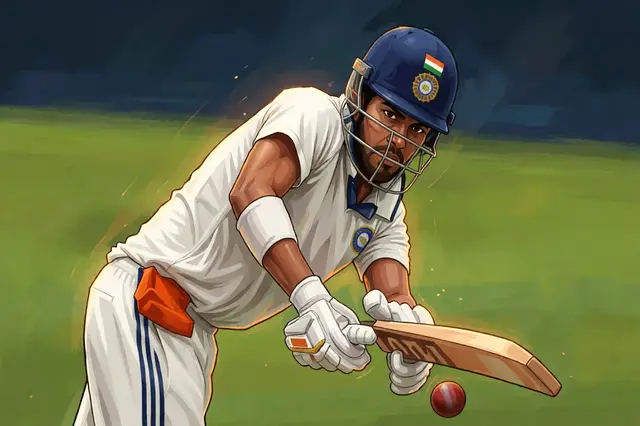

WPL’s Analytical Depth: How Live Score Data Is Reshaping Mumbai’s Pitching Strategy


Published 2026-11-20 · By Pooja Agarwal (Broadcast & Pitch Analyst · Mumbai Desk)

At 7:42 PM IST, the humidity off the Arabian Sea had turned the Brabourne outfield into a sticky mess. The ball wasn’t just skidding; it was dying on the hard length. In the net session just before, the impact player’s choice had already signaled the shift. They weren't looking to power through the air. They were looking to manipulate the pitch. The new ball did the talking. Nobody in the dugout bought the excuse that it was just bad luck. The data said otherwise.
When the Dugout Becomes a Control Room
For years, women’s cricket in India operated on gut feel and the hard-earned wisdom of the Ranji grind. Now, that wisdom is being sharpened by cold, hard numbers. The WPL has become the primary stage for this transition. It is not enough to hit a six. You need to know *why* you hit it, *where* the bowler’s release point is drifting, and *how* the surface is behaving under the floodlights. The boundary-percentage is no longer a vanity metric. It is a survival tool.
“We don’t just watch the batswoman. We watch the gap. The analytics tell us where the gap will open up two balls before she plays her shot.”That was the consensus from the coaching staff after the last domestic tournament. It was dry, precise, and entirely different from the old-school shouting matches in the commentary boxes.
The Anatomy of a Modern Pitching Report
Every evening, a new document hits the email. It’s not a press release. It’s a breakdown of release points, swing angles, and wicket-keeper stats. The teams are using this to map out the 'dead zones' on the track. If a left-arm spinner is consistently losing her off-break in the second over, the fielding captain knows. The fielding captain knows because the live score & match analytics dashboard is flagging it in real-time. This isn't sci-fi. This is Tuesday night in Mumbai.
- Over 1-5: Focus on containing the power. Use the new ball to force early mistakes.
- Over 6-15: Introduce variation. The dew factor after 8:30 PM IST will change the grip. Adjust the line.
- Over 16-20: Death bowling. Use the data to identify which batsman is weak to yorkers.
Why the Numbers Matter More Than the Hype
The Economist recently noted that the WPL is transforming women’s cricket. That is a massive claim. But when you sit in the stands, you can see it. The players are not just reacting. They are anticipating. The bowlers are not just throwing the ball. They are executing a plan. This is where the external data becomes critical. Teams are even looking at broader statistical models to gauge player value and match outcomes, sometimes referencing external aggregation platforms like Vipmatka420 India to cross-check their internal odds against public sentiment and betting market movements. It is not about gambling. It is about consensus. If the public thinks a team is undervalued, the market moves. The WPL teams are now monitoring that move. It is a strange ecosystem, but it works.
The Human Element in a Digital World
Let’s not get too lost in the spreadsheets. Cricket is still played by humans. Sweat, fear, and the fear of failure still rule the dressing room. A 20-year-old from the state-association pathway doesn't care about the bowler’s release-point angle if she is terrified of the ball coming at 130 km/h. The pressure of the scoreboard is a tangible thing. It sits on your shoulders. The analytics can tell you the optimal field placement, but they cannot tell you how to stay calm when you are 10 off from the target. That is the old-school skill. That is the skill that separates the pros from the pretenders. The best teams are the ones that blend the two. They use the data to make the decision easy, but they rely on the instinct to make the shot.
In the end, the game is not about the numbers. The numbers are just the map. The players are the ones who drive the car. And right now, in India, the engine is running at full capacity. The WPL is not just a tournament. It is a proving ground for the future of cricket. And the future is data-driven. (Filed from Mumbai, ReacSports)
Related coverage
- Vaibhav's Toss Panic: Live Score & Match Analytics Reveal Bihar's XI Glitch
- New Zealand Opener: India Gamble on Pace Over Spin; Live Score & Match Analytics

Updated 2026-11-20 · Instant Rupee Deposits & 60s Withdrawals · 24/7 Support.
Access Official ReacSports Portal →Broadcast & Pitch Analyst · Mumbai Desk
Pooja Agarwal reports on franchise leagues, the WPL, and domestic Indian tournaments for ReacSports. Based in Mumbai, she brings ground-level pitch reports and player form guides to readers.
Reader Discussion & Match Reactions (4)4.8★ Community (4 Comments)
Verified Indian cricket reader perspectives & tactical debate on reacjapan.com
The 'control room' narrative is just BCCI washing their hands of actual coaching deficiencies. If your impact player has to 'manipulate the pitch' because the surface is dying, your pitch report is worthless. Who signed off on that Brabourne outfield prep? I see the data, I see the cover-up, and I see why the domestic feeder system keeps failing these women every single year.
That 7:42 PM humidity detail reminds me of the Pune state trials last month where the hard length was choking the leg-spinners completely. We see this grassroots struggle in the Ranji qualifiers constantly, but suddenly the WPL treats it like a high-stakes engineering problem. It’s refreshing to see the state associations finally being pushed to match this level of surface analysis before the season starts.
The 'boundary-percentage' stat is useless without context on pitch moisture gradients. Watching a release point drift is fine, but you need to know the exact deviation in meters. If the ball is dying on hard length, that’s a surface decaying issue, not a tactical one. Who is calculating the real-time drag coefficient at Brabourne? The numbers seem too static for a wet outfield.
@Rajesh_Bhatia You’re right that the prep is suspect, but ignoring the data is worse. The article notes the impact player’s choice signaled a shift away from power hitting. That’s a specific tactical read of the sticky outfield. If you’re only looking at politics, you’re missing how the coaching staff is using those release-point breakdowns to find the gap two balls before the shot is played.