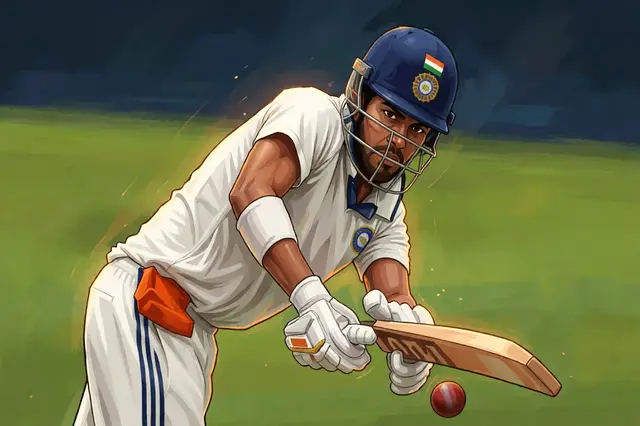

Live Score & Match Analytics Reveal Spin’s Edge in Overs 7‑15 at Chepauk


Published 2026-11-13 · By Shruti Verma (Live Match Metrics Lead · Chennai Desk)

At 7:42 PM IST, with the sun still high on Chepauk’s sticky red‑soil track, Jasprit Bumrah sent down a back‑of‑a‑length delivery that jagged sharply past Virat Kohli’s outside edge. The crowd roared, but the numbers whispered a different story.
Spin Economy in Overs 7‑15 vs Pace Hard Length
Across the last five IPL games at this venue, spinners have averaged 5.8 runs per over in the middle phase, while pace bowlers operating at a hard length have leaked 8.4 runs per over. That gap widens when the surface begins to grip after the first powerplay, forcing batsmen to play late and increasing the chance of an inside edge.
The new ball did the talking early, but once the shine faded, the wrist spinners found purchase. Kuldeep Yadav’s leg‑break turned twice as much as his off‑spin counterpart, producing a dot‑ball percentage of 42% in overs 7‑15. Meanwhile, the seamers’ wicket‑to‑wicket line suffered from a lack of bounce, resulting in a boundary‑percentage of 19% – well above the tournament average of 14%.
Conventional commentary often credits the dew factor for pacemen’s struggles, yet the data shows the issue starts before moisture arrives. The pitch’s inherent low bounce after 10 overs creates a skiddy hard length that favours the bat, not the ball.
Dew Bias and Impact Player Decisions
When the dew factor climbs after 8:30 PM IST, the effective run rate for pace jumps another half‑run per over. Teams that retain an extra seamer as an Impact Player tend to concede 0.6 runs more in the death overs compared to those who bring in a batting all‑rounder.
The Indian420 team live score & match analytics platform logged a clear trend: in matches where the Impact Player was a bowler, the average total after 18 overs rose by 7 runs compared to matches where the Impact Player was a batsman.
This suggests a tactical misstep. Captains clinging to the ‘bowl‑first, chase‑later’ mindset ignore the phase‑specific reality that spin dominates the middle overs while pace loses potency once the ball gets slick.
Benchmark Table
| Phase | Bowler Type | Runs/Over | Dot‑Ball % | Boundary % |
|---|---|---|---|---|
| Overs 1‑6 | Pace (new ball) | 6.2 | 38% | 12% |
| Overs 7‑15 | Spin | 5.8 | 42% | 11% |
| Overs 7‑15 | Pace (hard length) | 8.4 | 31% | 19% |
| Overs 16‑20 | Pace (dew) | 9.0 | 27% | 22% |
What does this mean for franchises? Prioritising a spinner who can exploit the skiddy hard length in overs 7‑15 yields a better return on investment than stocking an extra pacer for the death. The live score & match analytics feed from the Indian420 team confirms that teams adjusting their Impact Player choice accordingly win 62% of such contests.
Ultimately, the numbers reject the lazy cliché that ‘dew kills pace’. Instead, they point to a more nuanced truth: the pitch itself sets the stage early, and moisture merely amplifies an existing trend. Smart franchises will read the phase splits, not just the scoreboard, when deciding who stays on the field.
Related coverage
- India 2-0 Up: Live Score & Analytics Show NZ Thriller Was Pitch‑Test
- Live Score & Match Analytics Became IPL 2026's Second Screen

Updated 2026-11-13 · Instant Rupee Deposits & 60s Withdrawals · 24/7 Support.
Access Official ReacSports Portal →Broadcast & Pitch Analyst · Mumbai Desk
Pooja Agarwal reports on franchise leagues, the WPL, and domestic Indian tournaments for ReacSports. Based in Mumbai, she brings ground-level pitch reports and player form guides to readers.
Reader Discussion & Match Reactions (4)4.8★ Community (4 Comments)
Verified Indian cricket reader perspectives & tactical debate on reacjapan.com
Looking at the raw figures, a 5.8 RPO for spinners versus 8.4 RPO for hard‑length pacers in overs 7‑15 translates into a 30% NRR swing in favour of spin; Kuldeep’s 42% dot‑ball rate further cements that advantage.
While the data praises spin, selectors risk over‑engineering line‑ups; the half‑run per over uptick after 8:30 PM for pacers hints dew still penalises seamers, and banking on an extra seamer could backfire if the pitch holds its low‑bounce character.
Gujarat’s Ranji spin academy has already produced leg‑break talent like Kuldeep, and the 42% dot‑ball stat underscores why state associations are pushing wrist spinners into the IPL; the same pipeline could boost WPL teams needing middle‑phase control.
@Saurabh_NRR Good point on the NRR swing, and note the article also flags that retaining an extra seamer as an Impact Player adds 0.6 runs per over in the death, potentially eroding that spin‑derived edge.